- AI&TFOW
- Posts
- Entrepreneurship in the Age of AI [Newsletter #81]
Entrepreneurship in the Age of AI [Newsletter #81]
Relationships as a Competitive Advantage

AI and the Future of Work
January 06, 2026
Hello, AI enthusiasts from around the world.
Welcome to this week’s newsletter for the AI and the Future of Work podcast.
AI can help create companies in days. It removes friction that shaped work for decades, making entrepreneurship more accessible than ever.
At the same time, differentiation is becoming harder. Many teams now build with similar tools and similar capabilities.
That’s why this week’s conversation returns to a core principle of entrepreneurship. Build technology that makes humans better.
Let’s dive into this week’s highlights. 🚀
🎙️ New podcast episode with Henrik Werdelin, Co-Founder of BARK
Will the future be filled with copies of the same idea, or will it bring something new?
It is a question many people overlooked at first. Now it keeps surfacing as AI becomes part of everyday work. When powerful tools reached the mainstream, entrepreneurship opened up. Barriers fell. Access expanded. That shift matters.
But it also introduced a new tension. When many teams rely on the same tools, differentiation becomes harder. Businesses start to resemble each other. Ideas repeat with small variations. The issue is not AI itself. It is what happens when tools replace judgment.
For Henrik Werdelin, the answer has little to do with software. Entrepreneurship starts with a real problem and the person experiencing it. Tools come later.
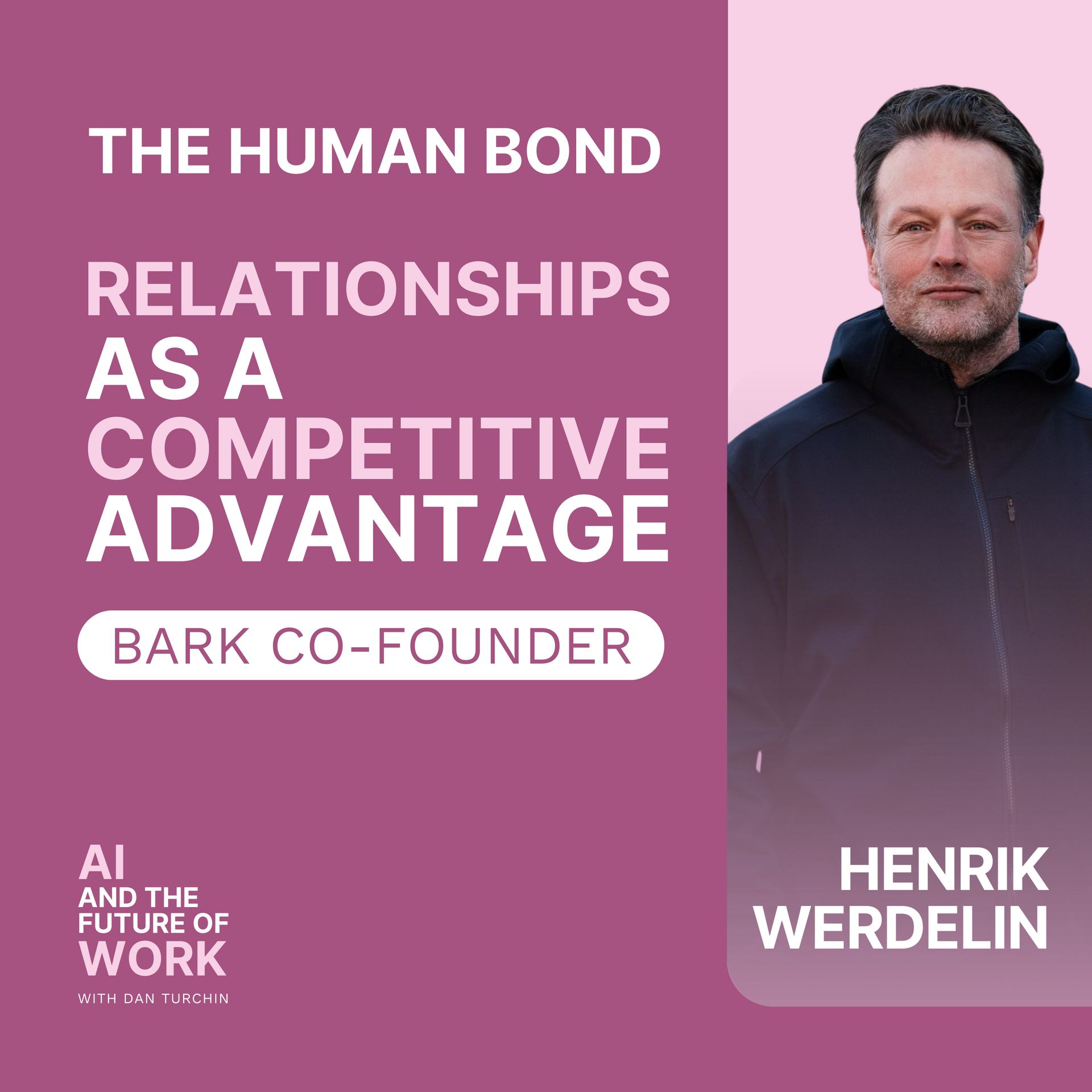
Henrik brings more than 15 years of experience building and backing companies. He co-founded BARK, a brand built for dogs and dog parents, and the startup studio Prehype. He has been recognized by Fast Company as one of the “Top 100 Most Creative People in Business” and by Business Insider’s Silicon Alley 100.
In his recent book, “Me, My Customer, and AI”, Henrik explains how AI reshapes entrepreneurship. AI speeds execution and removes friction. One thing does not change. Progress still depends on understanding the customer.
PeopleReign CEO Dan Turchin spoke with Henrik about this idea. Their conversation centers on service. Entrepreneurship means solving a real problem for someone and building a way to scale that solution.
From Henrik’s view, AI changes who gets to do that work. More people can now build for people they care about.
This week's conversation covers this and much more:
Over-automation often leads to similar solutions and increases distance between companies and their customers.
Chasing a billion-dollar outcome from day one pulls focus away from what actually drives progress: curiosity, care, and intensity.
Humans remain essential in connecting real customer needs with meaningful company decisions.
AI should never replace empathic customer service; human understanding is essential.
🎧 This week's episode of AI and the Future of Work, featuring Henrik Werdelin, Co-Founder of BARK
Listen to the full episode to learn more about the true value of human values in the entrepreneurs of the future.
📖 AI Fun Fact
AI’s future has entered the political arena, and state laws now carry national weight. California Governor Gavin Newsom recently signed the state’s AI safety law, the first of its kind in the United States.
Reporting in Politico, Chase DiFeliciantonio notes that the law sets early groundwork for a national standard. Other states and Congress are already treating California as a reference point.
Under SB 53, certain AI developers must publicly disclose safety and security protocols. The law also allows the public and other companies to report major safety incidents to the state. Another provision begins the path toward a state-run cloud computing cluster. Whistleblower protections for workers in the AI industry stand out as a defining feature.
Resistance has surfaced. In Congress, Republican Senator Ted Cruz has pushed to pause state-level AI legislation. That effort was excluded from a major bill passed earlier this year.
At the same time, a national AI safety framework is taking shape. Members of Congress are exploring how state-level efforts could inform broader federal policy.
Major AI companies including OpenAI, Meta, and Anthropic endorsed the bill. Others support only select provisions. Andreessen Horowitz, for example, warns that regulation can favor large incumbents while slowing startups and innovation.

Source: Andy Potts for POLITICO
PeopleReign CEO Dan Turchin highlights a troubling reality. The issue of AI safety has become politicized. Federal, state, and global leaders have a responsibility to rise above re-election interests and partisan agendas and agree on one thing. AI guardrails are not optional.
AI is an opportunity for every human to gain access to education, medical treatment, and cures for disease. We can use AI to help end famine and reduce international conflict without the loss of human life.
We can’t regulate AI at the glacial speed of government policy. This is an important moment to remind legislators that they work for us, and that their job is to protect and preserve the lives of citizens while promoting civil discourse. Dan urges us to hold them accountable and not wait for them to act responsibly.
Listener Spotlight
Lisa is an entrepreneur based in Baton Rouge, Louisiana. Her favorite episode is #294 with Bernard Marr, where he shares practical insights on using generative AI to move your career forward.
🎧 You can listen to that excellent episode here!
As always, we love hearing from you. Want to be featured in an upcoming episode or newsletter? Comment and share how you listen and which episode has stayed with you the most.
Worth A Read
How do you summarize AI’s evolution in 2025? One word keeps surfacing: Bubble.
Debate continues around whether AI investment has overheated. Momentum slowed after several expected milestones failed to materialize, including the abandoned data center deal between Oracle and Blue Owl. You can read more about it here.
That failed deal carries broader implications. This article explains how ripple effects like this one could contribute to a market correction.

Source: The Guardian
Many experts expect a pullback and see opportunity in it. Moments like these create space for clearer conversations about regulation, boundaries, and control.
As competition for AI leadership intensifies, incentives to slow down and address risk continue to shrink. The article makes a sharp distinction. The real bubble may not be valuations, but the lack of accountability surrounding AI’s growth.
If a correction comes, it could amplify public pressure for more responsible use of AI.
📣 Share your Thoughts and Leave a Review!
We want to hear what you have to say! Your feedback helps us improve and ensures we continue to deliver valuable insights to our podcast listeners. 👇
Until Next Time: Stay Curious 🤔
We want to keep you informed about the latest developments in AI. Here are a few stories from around the world worth reading:
Some CEOs argue AI will not lead to better work-life balance. This piece explains why.
Auditors are turning to AI to raise efficiency and reduce manual workload. This article breaks down how the shift is taking place.
An AI initiative in Florida supports communities by predicting and tracking patterns of drug use.
👋 That's a Wrap for This Week!
This week’s conversation brings us back to a simple truth: even as AI removes friction, entrepreneurship remains deeply human.
Lasting success does not come from building things simply because technology makes it easy. It comes from empathy, curiosity, and a genuine desire to solve real problems for real people.
If you liked this newsletter, share it with your friends!
If this email was forwarded to you, subscribe to our Linkedin’s newsletter here to get the newsletter every week.