- AI&TFOW
- Posts
- Why Trust Drives AI Adoption [Newsletter #80]
Why Trust Drives AI Adoption [Newsletter #80]
Leadership in the AI Era

AI and the Future of Work
December 30, 2025
Hello, AI enthusiasts from around the world.
Welcome to this week's newsletter for the AI and the Future of Work podcast.
In the short and rapid early stage of AI adoption, we’ve seen more organizations embrace AI across their operations. At the same time, fear of job loss and hesitation around learning AI still persist.
There’s a key factor in shifting this dynamic. Surprisingly, it often isn’t employees who resist change most. Instead, the way leaders frame AI sets the tone.
Leaders who build trust through transparency and empathy create the conditions for successful AI adoption.
Today’s conversation highlights the key traits these leaders must have.
Let’s dive into this week’s highlights! 🚀
🎙️ New podcast episode with Kelly Jones, Chief People Officer at Cisco
As AI becomes more present in our work and daily lives, the narrative that AI will take our jobs is starting to lose strength.
AI can make work more meaningful and more human. If fear still lingers, it’s not because the technology falls short.
According to Cisco’s Chief People Officer, Kelly Jones, it comes down to how leaders show up.
Building healthy teams has been central to Kelly’s work during her 18 years at Cisco, where she has helped shape global teams and strengthen the company’s reputation as a best place to work.
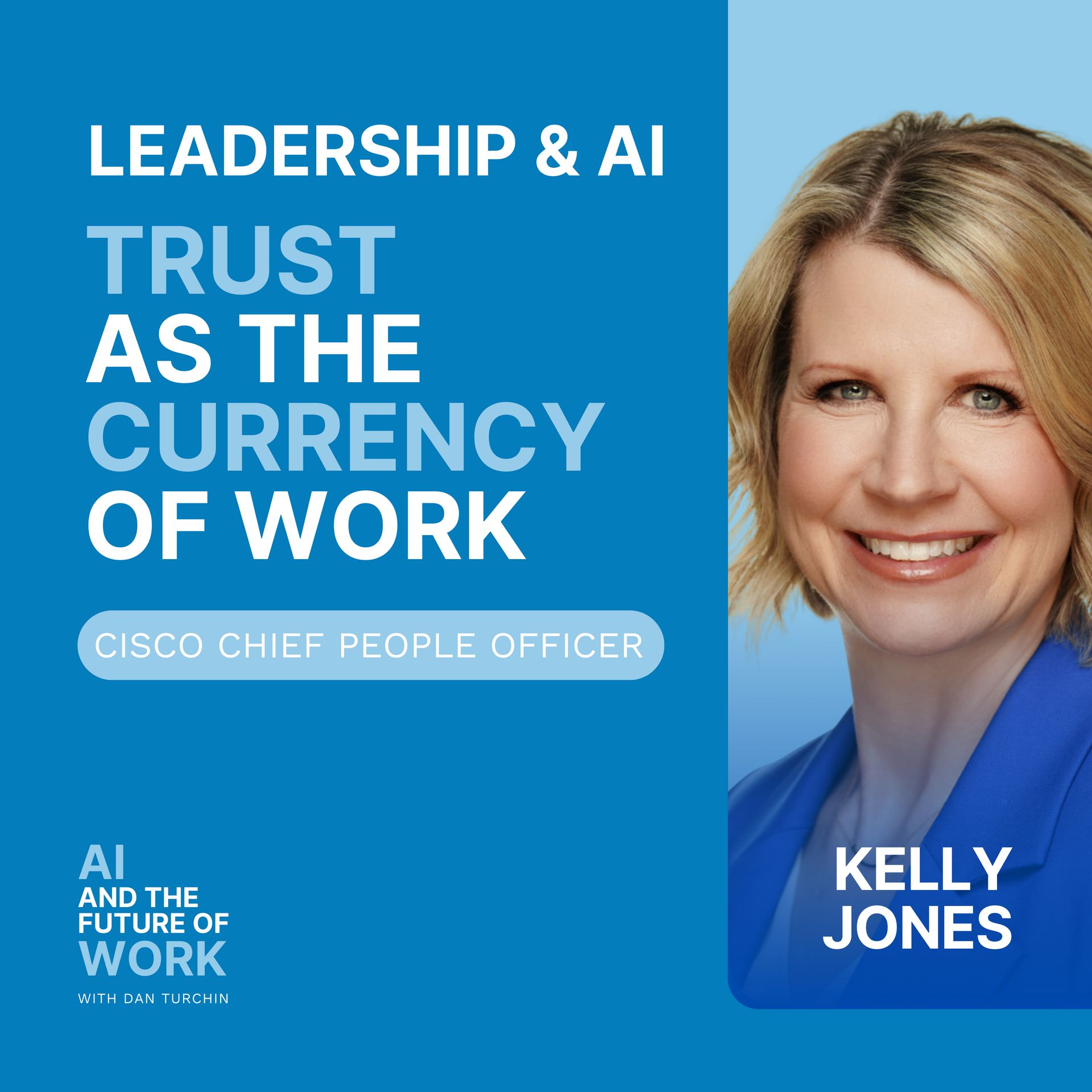
Today, she leads the evolution of Cisco’s culture in the age of AI, shaping strategies that impact more than 86,000 employees worldwide.
For Kelly, openness toward AI doesn’t begin with employees. It starts with leaders and with how they frame AI inside the organization. The logic is simple. When leaders promote fear, that fear spreads. When they promote clarity and trust, teams follow.
This responsibility weighs even heavier for those in leadership roles.
Kelly sat down with PeopleReign CEO Dan Turchin to share a reminder many leaders need to hear: In moments of uncertainty, employees look up, not out. In her experience, AI adoption accelerates when leaders invite employees into the design and deployment process.
Transparency lowers fear. Inclusion builds confidence. And together, they create excitement for what comes next. A future where AI doesn’t replace human capability—it strengthens it.
In this conversation, we cover this and much more:
Why trust has become the most valuable workplace currency, shaping decisions around AI, culture, and leadership.
What “super leadership” looks like, and the four traits Cisco’s CPO believes define successful managers in an AI-augmented workplace.
How Cisco evaluates AI use cases through disruption, scale, and their impact on the employee experience.
Why the real value of AI sits in automating administrative work, giving people more time to focus on meaningful work, creativity, and connection.
The systems Cisco is putting in place to support responsible AI adoption, including governance, upskilling, and clear ethical guidelines.
🎧 This week's episode of AI and the Future of Work, featuring Kelly Jones, Chief People Officer at Cisco.
Listen to the full episode to learn how leadership and trust shape successful AI adoption across organizations.
📖 AI Fun Fact
On October 20, 2025, large parts of the internet slowed or stopped altogether.
ChatGPT went quiet. Smart mattresses stopped working. Video games like Fortnite blinked out. Platforms like Snapchat and even banking apps were affected.
Across the web, services tied to Amazon Web Services stalled. Online shopping paused. Ring doorbell cameras failed. What looked like isolated glitches quickly revealed something bigger.
An AWS outage rippled across the internet and exposed how much of our digital world depends on a single layer of infrastructure.
The cause was a DNS resolution issue.
DNS, or the Domain Name System, translates URLs like “Amazon.com” into IP addresses. You can think of it as a phonebook that lets everything connect online.
But when those phone numbers are outdated or wrong, and you’re AWS, everything breaks fast. That’s a DNS resolution issue.
AWS has suffered major outages before. This one stood out because of its timing.
Just months earlier, Amazon’s cloud unit cut hundreds of jobs, possibly more. At the time, CEO Andy Jassy warned that the adoption of generative AI would lead to layoffs.
That context matters. Not because AI caused the outage, but because it shapes how people interpret moments like this.
If Amazon is relying on AI to pick up the slack after those AWS layoffs, this outage may serve as a stark example of how attempts to rely too heavily on AI systems can backfire, as Noor Al-Sibai writes in Futurism.
In the same article, Al-Sibai quotes Corey Quinn, a cloud computing expert and author of the Last Week in AWS newsletter, who said:
“You can hire a bunch of very smart people who will explain how DNS works at a deep technical level but the one thing you can’t hire for is the person who remembers that when DNS starts getting wonky, check that seemingly unrelated system in the corner, because it has historically played a contributing role to some outages of yesteryear.”

Source: Futurism
PeopleReign CEO Dan Turchin expects more dissonance as customers and displaced workers look to assign blame to AI that has seemingly replaced jobs. The counter-narrative is that AI is better at detecting and resolving outages than humans with limited recall.
As is often the case, the answer is more complicated.
A combination of human domain experts paired with machines trained on trusted historical data would have likely led to a faster resolution of the DNS issue.
Expect smaller teams of experts working alongside AI-driven predictions and recommendations to become the new work paradigm.
And as tech-driven apps and services continue to proliferate, expect the demand for new human domain experts to more than offset reduced team sizes. If you’re in a role that is easily automated, now is the time to reskill and upskill.
You have a unique opportunity to become a domain expert and, in the process, turn toil into more meaningful, higher-paying work.
Listener Spotlight
Farat is a data analyst whose favorite episode is No. 294 with Bernard Marr, where they discuss how to use generative AI to get ahead in your career.
🎧 You can listen to that excellent episode here!
As always, we love hearing from you. Want to be featured in an upcoming episode or newsletter? Comment and share how you listen and which episode has stayed with you the most.
Worth A Listen
The conversation around AI pessimism keeps resurfacing. Media narratives often frame AI in extremes, either as a force for good or a source of harm.
At the same time, AI adoption continues to grow. One of the most widely used platforms is ChatGPT, developed by OpenAI. It is accessible to anyone with an internet connection and can respond to a wide range of questions, even as new constraints shape how the platform operates.
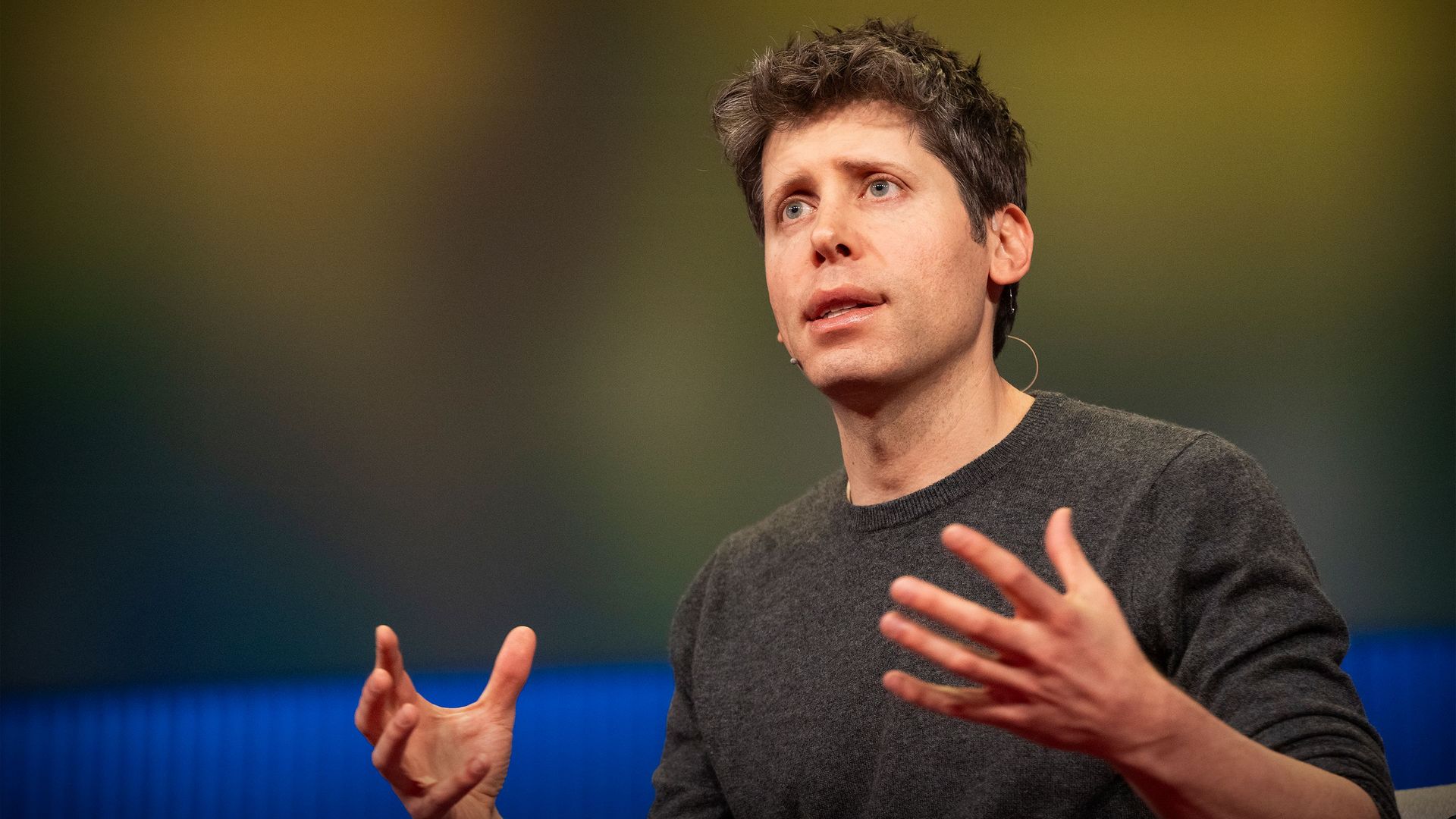
So what does its CEO, Sam Altman, think about the doomsday scenarios we hear so often?
You can hear his perspective in this TED Talk.
📣 Share your Thoughts and Leave a Review!
We want to hear what you have to say! Your feedback helps us improve and ensures we continue to deliver valuable insights to our podcast listeners. 👇
Until Next Time: Stay Curious 🤔
We want to keep you informed about the latest developments in AI. Here are a few stories from around the world worth reading:
Google’s boomerang hiring strategy highlights the value of human talent. Nearly 20% of recent hires are former employees. Here’s more.
Chatbots often use “I” when responding, but many experts argue this creates confusion and misplaced trust. Here's why.
New York moves to regulate AI in advertising, while the White House takes a different approach.
👋 That's a Wrap for This Week!
Leaders play a central role in helping teams and organizations embrace AI with confidence. Empathetic and motivating leadership helps people feel safe, curious, and willing to reinvent themselves for the future.
This conversation reinforces a recurring theme. AI creates the most value when it helps humans do better work. We hope it encourages you, as a leader, to build the trust and transparency required to make that future real. 🎙️✨.
If you liked this newsletter, share it with your friends!
If this email was forwarded to you, subscribe to our Linkedin’s newsletter here to get the newsletter every week.