- AI&TFOW
- Posts
- Why Curiosity Matters More Than Credentials [Newsletter #84]
Why Curiosity Matters More Than Credentials [Newsletter #84]
Learning in an AI-shaped world

AI and the Future of Work
January 27, 2026
Hello, AI enthusiasts from around the world.
Welcome to this week’s newsletter for the AI and the Future of Work podcast.
For centuries, universities sat at the center of education and professional growth. Entire learning systems formed around them. That structure is now under pressure.
AI is driving this shift. Memorizing answers matters less. Asking better questions matters more.
This change reaches beyond academia. It shapes how we learn, how we work, and how we make decisions about our lives.
Let’s dive into this week’s highlights! 🚀
🎙️ New podcast episode with Lynn Thoman, Professor at Columbia University and 3 Takeaways Podcast host
Academia is facing a period of disruption. For many people, that creates discomfort.
AI is reshaping how learning happens, and education looks very different now than it did even a few years ago. Longstanding systems are under pressure to change, and not every institution will adapt at the same pace.
For decades, people built entire careers around the degree they earned. That path once felt essential. Today, it holds less weight.
Lynn Thoman sees this shift as an opportunity. It’s a chance to elevate one of the most human skills education can help develop: curiosity.
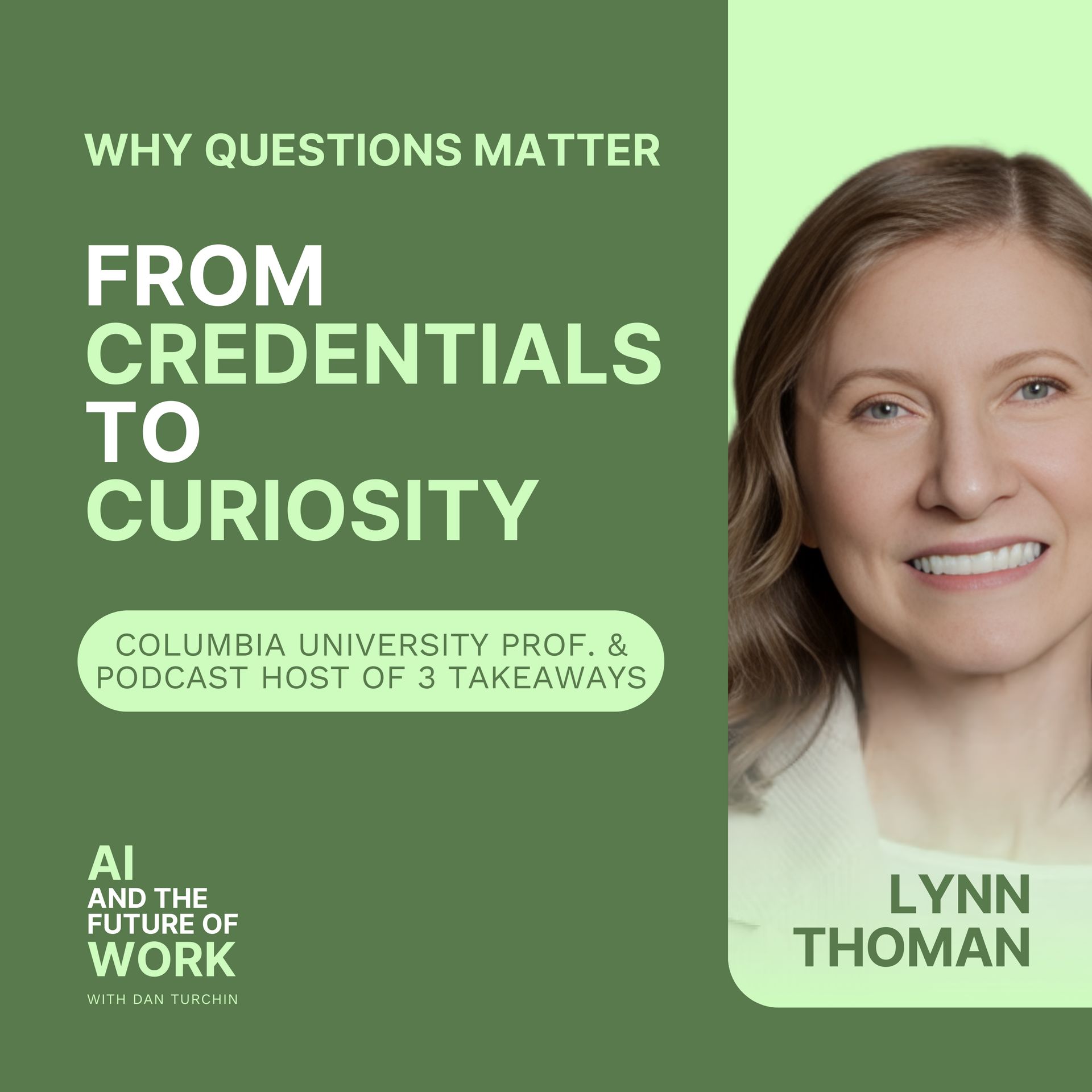
Lynn is a professor at Columbia University School of International and Public Affairs and host of 3 Takeaways, a Top 1% global podcast known for distilling big ideas into practical insight.
At Columbia, she teaches leaders how to scale social impact and build effective public-private partnerships. On her podcast, she hosts conversations with global decision-makers about how ideas shape leadership, work, and society.
Her work keeps her close to the changing role of academia. In her conversation with Dan Turchin, Lynn explains how AI creates space for humans to lean into curiosity. AI already handles tasks like summarizing research, analyzing data, and drafting reports.
As those capabilities expand, skills rooted in memorization and static knowledge matter less. What matters more is how we think, question, and explore what comes next.
In this conversation, we explore these ideas and more:
Why the most useful way to understand AI is as an amplifier of human capability. This becomes clear in leadership, where judgment and decision-making matter more than any tool.
What preparing students for an AI-shaped job market looks like when education emphasizes learning paths, adaptability, and relationships over fixed career tracks.
The hidden risks inside AI systems. Small shifts in data or models can create downstream harm that is difficult to detect or undo.
How AI is pulling education, work, and leadership back toward core human skills such as judgment, curiosity, and imagination.
Why AI’s greatest upside lies in expanding access to knowledge, health, and opportunity—not in replacing human intelligence.
🎧 This week’s episode of AI and the Future of Work features Lynn Thoman, Professor at Columbia University and host of the 3 Takeaways podcast.
Listen to the full episode to hear why Lynn views AI’s growing role in academia as a constructive shift for the future of thinking and shared learning.
📖 AI Fun Fact Article
Republicans and Democrats often hold opposing views on many topics. According to Pew Research Center researchers Monica Anderson and William Bishop, both sides now share similar concerns about AI in daily life.
Members of both parties report feeling both concerned and excited about increased AI use. Around 10% of each group say they feel more excitement than concern.
The data shows a clear shift. In 2021, Republicans were more likely than Democrats to say they felt concerned about AI’s growing role in daily life. Since 2023, the share of Republicans who express concern has dropped by nine percentage points.
Democrats show the opposite trend. In 2021, 31% expressed concern about AI’s role in daily life. That figure rose to 46% in 2023 and reached 51% in 2025.
The result is a political impasse. Some advocates push for stricter AI regulation. Others warn that aggressive rules could slow innovation.
California recently became the first state to regulate chatbots, adding momentum to the broader debate around AI governance.
Public trust remains divided. About 44% of Americans say they trust the U.S. government at least somewhat to regulate AI effectively. By contrast, 47% say they have little to no trust in its ability to do so.
Most Americans also report higher trust in the European Union to regulate AI than in China.
Source: European Law Firm
PeopleReign CEO Dan Turchin reminds us that governments have a responsibility to protect the welfare of citizens. Unfortunately, as with many aspects of modern society, AI safety has become politicized.
Political parties are an artifact of a different moment in history, when ideological debates were more civil and grounded in principles rather than personal interests. Today, political polarization and a zero-sum approach to nearly every issue make it difficult for citizens to entrust AI regulation to governments.
In the U.S., there is no agreement on who should regulate AI, whether states or the federal government, nor on what should be regulated. What is clear is that bureaucrats often lack the technical understanding, and at times the motivation, to regulate AI for the right reasons.
Similar challenges have slowed progress in the EU and beyond. Still, a small but growing group of researchers and executives is working to create frameworks that allow AI labs and vendors to self-report their progress using balanced scorecards of risk factors.
Let’s celebrate and support those efforts. Responsible AI requires collective action, and this is an important moment.

Free Assessment
Listener Spotlight
Darnell is a fiction author based in Seattle, WA. His favorite episode is #188, featuring Paul Allen, founder of Ancestry.com and SOAR, where the conversation explores how AI is reshaping entrepreneurship.
🎧 You can listen to that excellent episode here!
As always, we love hearing from you. Want to be featured in an upcoming episode or newsletter? Comment and share how you listen and which episode has stayed with you the most.
📽️ Worth a Watch
As AI reshapes entire industries, the systems powering this shift face growing strain. As this article explains, demand continues to rise across the supply chain, from raw minerals to fully finished components.
One component stands out: the memory chip. Demand surged in 2025, and current signals point to sustained pressure in the years ahead.

Source: Arrow Electronics
Experts agree the shortage has reached unprecedented levels. Demand shows no sign of easing. Companies are racing to build the infrastructure needed to keep pace, including a new $100 billion production site planned outside Syracuse.
Infrastructure takes time. In the near term, major tech players such as Xiaomi are already scaling back shipment targets for 2026.
We'd love to hear from you. Your feedback helps us improve and ensures we continue bringing valuable insights to our podcast community. 👇
Special Podcast Episode
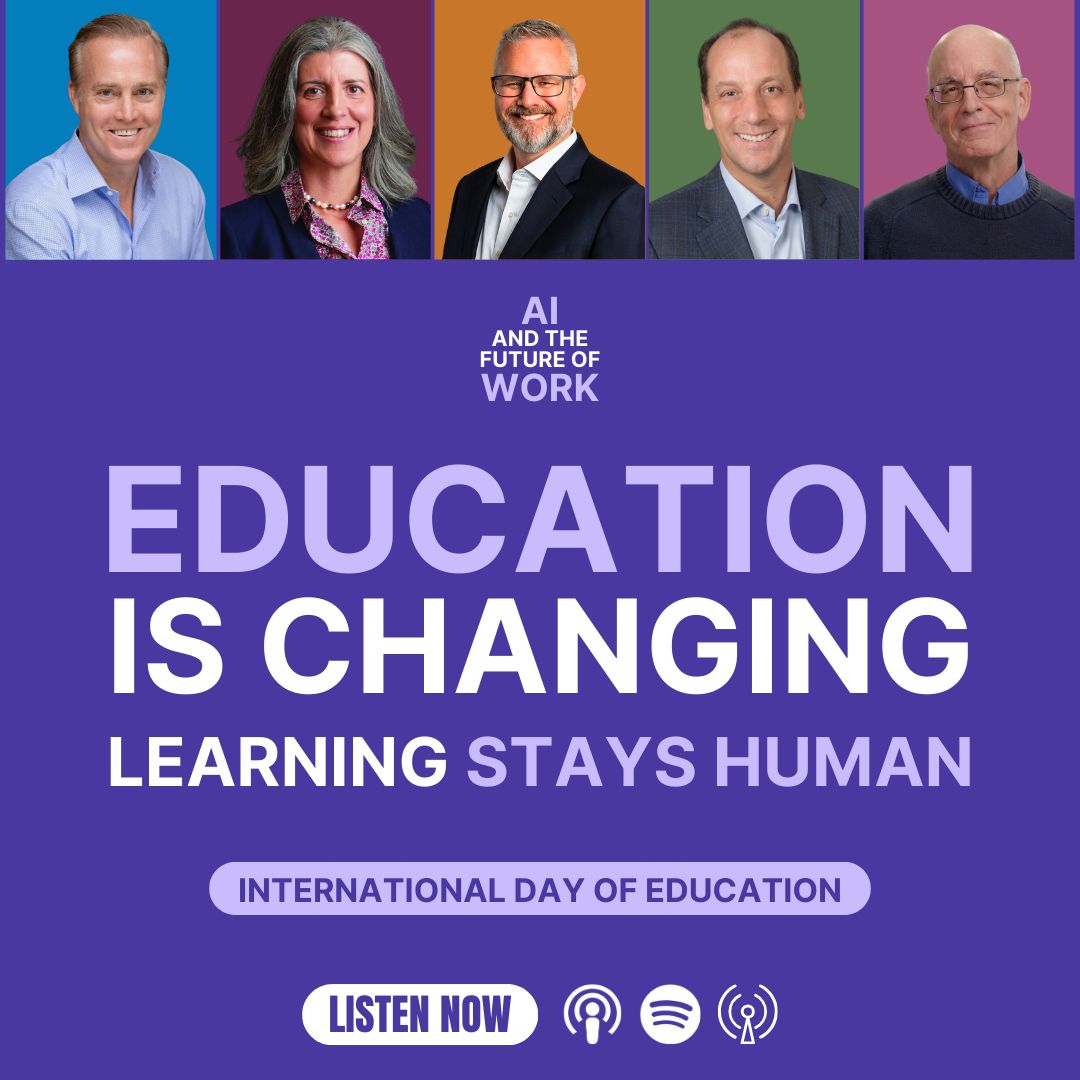
To mark International Day of Education, we released a special compilation episode of AI and the Future of Work that explores what learning looks like in the age of AI .
This compilation brings together voices from across the global education ecosystem.
Each one tackles a different piece of the same question.
How do you learn when the world keeps changing?
Featured perspectives
Chris Caren, CEO of Turnitin, redefining originality, integrity, and trust in education.
Marni Baker Stein, Chief Content Officer at Coursera, explaining how learning becomes personal at scale.
Dave Treat, CTO at Pearson, meeting learners in the moments they actually study.
Dave Marchick, Dean of the Kogod School of Business at American University, pushing curriculum change from the inside.
Gary Bolles, Chair for the Future of Work at Singularity University, reframing education as a lifelong system.
Share it with someone who is learning, teaching, or rethinking what education should be next.
Until Next Time: Stay Curious 🤔
We want to keep you informed about the latest developments in AI. Here are a few stories from around the world worth reading:
VCs have always assumed risk in pursuit of the next transformative technology. Is that why investors are placing big bets on AI security? This article explores the reasoning.
Steady global growth looms on the horizon as AI helps offset trade tensions, according to the International Monetary Fund. Here’s how.
Early AI adopters made rapid gains in technical skills, but many paid a price in lost human connection and lower productivity, as this study explains.
👋 That's a Wrap for This Week!
Academia has shaped society for centuries, and AI doesn’t negate that role. What changes is how we study and how learning fits into our lives.
Earning a degree no longer carries the same weight. In many cases, it is no longer even a priority. AI is pushing even the most established institutions to rethink how learning actually works.
The age of AI brings us back to something deeply human: curiosity. We hope this week’s episode encourages you to ask better questions, not just search for faster answers.
If you liked this newsletter, share it with your friends!
If this email was forwarded to you, subscribe to our Linkedin’s newsletter here to get the newsletter every week.