- AI&TFOW
- Posts
- When AI Creates Art, What Stays Human? [Newsletter #95]
When AI Creates Art, What Stays Human? [Newsletter #95]
Intent, Taste, and Human Connection

AI and the Future of Work
April 14, 2026
Hello, AI enthusiasts from around the world.
Welcome to this week's newsletter for the AI and the Future of Work podcast.
Many of us dream of creating art. Not everyone has the talent to do it, so we often stay on the sidelines as the audience instead of the artists.
So what happens if something helps unlock that potential? That's where AI starts to play a role in art.
You might not compose a song or paint an oil fresco, but you can guide the process. You can direct. You can prompt. The future of art starts to feel more open, and that brings both opportunity and tension.
Today's conversation explores what happens to art, to creativity, and to what makes us human when some tools that once separated artists from everyone else are suddenly available to all.
Let's dive into this week's highlights! 🚀
🎙️New Podcast Episode With Jake Saper, General Partner at Emergence Capital
Messing up a painting means starting over with a new canvas.
Composing a song takes time, patience, and the right tools.
Writing a book demands something even harder. Time, and a lot of it.
Creating art has always been expensive. At its core, it's the compression of human experience into something we can share with others.
As AI becomes part of more areas of our lives, a new question starts to take shape. What happens to art in this context?
And once you start asking it, more questions follow.
Should we know when something is AI-generated?
Should it still be considered art?
What does the future of art look like from here?
Few people are better positioned to sit with those questions than someone who has spent years both backing the companies building AI and performing on stage as a working musician.
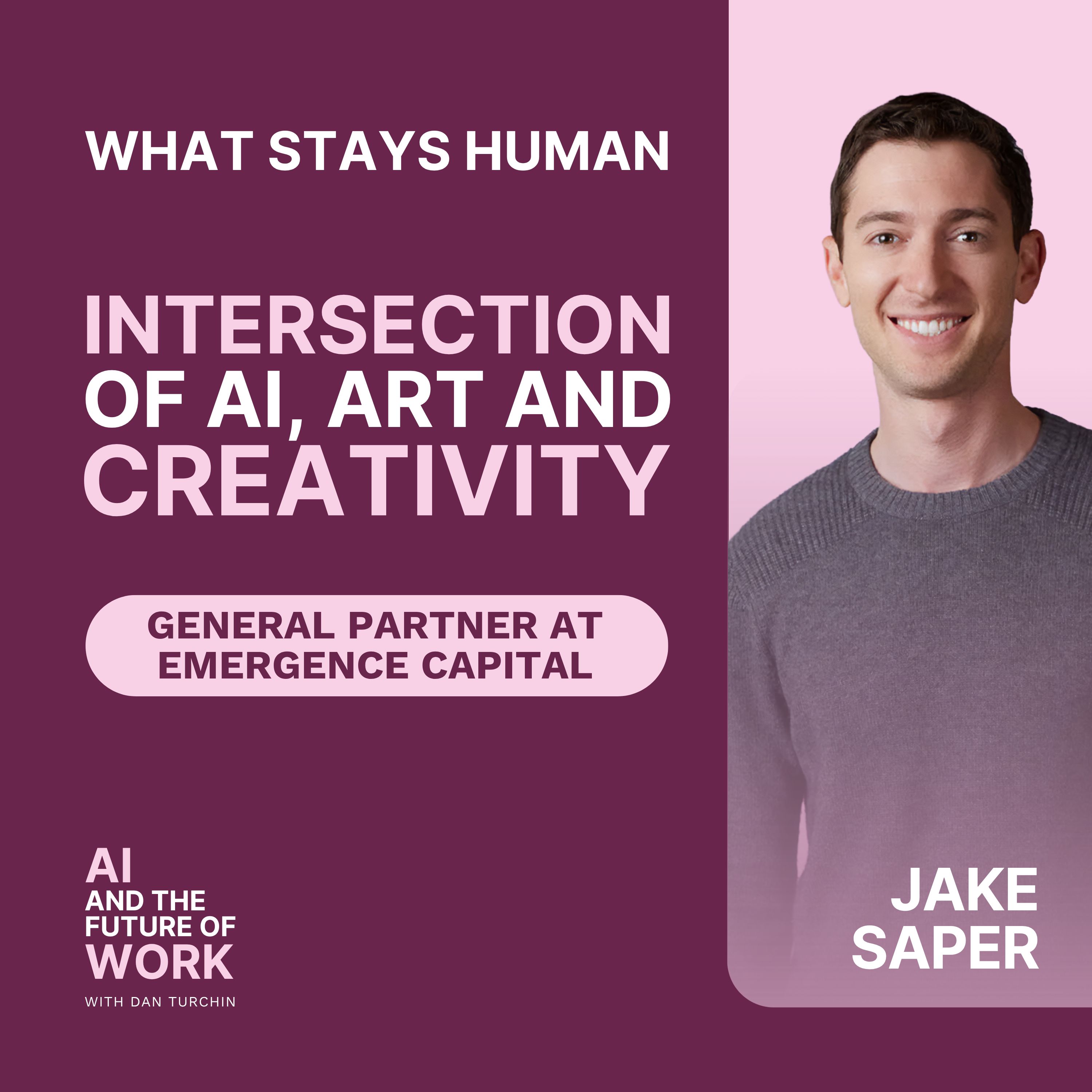
Jake Saper is a General Partner at Emergence Capital, one of the most iconic venture firms in enterprise software, with a portfolio that includes Zoom, Gusto, Veeva, and Together AI. Jake has spent nearly 12 years at the center of that deal flow.
Jake sat down with PeopleReign CEO Dan Turchin to explore how AI is collapsing the cost of iteration, one of the most expensive parts of creating art. People who don't write or play instruments can now direct the process. They can prompt, shape, and guide outcomes.
This opens the door to more creativity. But when output becomes cheap, attention becomes the constraint. The creators who stand out will be the ones with clear taste, real intent, and a strong relationship with their audience.
In that world, taste and intention become more valuable, not less.
In this conversation, we discuss this and much more:
The acceleration of startup growth in 2025. Top-quartile B2B software companies now scale from zero to $1 million in ARR in four months, compared to 18 months in 2022.
Why AI democratizes creative output but makes the human relationship with the audience more important than ever.
Why Jake believes the market will self-regulate how we relate to AI agents at work, and how we will set limits on how much we want bots to do for us.
What Geoffrey Hinton meant by building AI “like a mother,” why that idea feels both comforting and unsatisfying, and what it signals about AGI risk.
Why disclosure matters during this transition period, and the deeper question Jake believes we should ask about art as AI becomes a standard creative tool.
Why more automation at work will increase the need for mistakes, idiosyncrasies, and the kind of weirdness only humans bring.
🎧 This week's episode of AI and the Future of Work, featuring Jake Saper, General Partner at Emergence Capital, is now available
Listen to learn how Jake connects AI and art, and how that perspective shapes his approach to venture capital, where automation handles static tasks and raises the importance of judgment and trust.
📖 AI Fun Fact Article
Salvador Dalí drew inspiration from Sigmund Freud to turn his inner psyche into surreal worlds. Taylor Swift turned breakups into songs heard by millions. Frida Kahlo transformed a life-altering accident into deeply personal art.
Artists create from lived experience, raw emotion, and how they see the world. Their work helps express, connect, and sometimes even heal.
So where does that leave AI? Can models reach the same level of creativity? A simple answer might be no. That's the view shared by the news team at Emory University in a recent piece on creativity in the age of AI. Machines don't have childhood memories. They don't have bodies that feel pain. Without those elements, it's hard to define what true creativity looks like for them.
"Writing is a deeply human act, and it can be challenging, even painful. New writers who don't realize these moments of doubt are normal may fear something's wrong with them... But it's necessary for the process", writes Gwendolynne Reid, associate professor of English at Emory's Oxford College.
Image credit: Still from the documentary "Border”
However, it's not only human experience. That's also where AI gets its ability to create something that resembles art. There's no denying that generative AI has been built on the backs of writers, illustrators, and musicians, and their lives. LLMs are trained on their content to generate new outputs for the public to use, often without compensation or attribution. So it's no wonder many question how far AI will trespass into their livelihoods as it trains on their creations.
The authors at Emory University see it as vital to protect human labor while also embracing the benefits of AI. As jobs are displaced and technology reshapes daily work, we must learn how to grow creatively with AI rather than be diminished by it.
PeopleReign CEO Dan Turchin highlights that all art throughout history has been influenced by external sources. Michelangelo was inspired by Greek and Roman sculptors. Paul McCartney was inspired by Little Richard and Elvis Presley.
New works are always derived from some combination of past works. It’s often difficult to see those hidden layers. AI accelerates both the creation and destruction of art, but how it makes us feel, regardless of the authoring process, does not change.
We experience art when a song makes us feel joyful or sad, when a meal reminds us of childhood, or when a photo helps us explore a new place. As humans, we decide how art connects with us, gives us meaning, and inspires us.
AI is pattern matching at scale, operating at a speed we have never seen before. This phase in human history gives us a chance to rethink our relationship with art. We can choose to evaluate art based on how it makes us feel, rather than who, or even what, created it.
Listener Spotlight
Tamara is a listener from Mill Valley, California. Her favorite episode is #25 with Bill Davidow, venture capital pioneer and co-founder of Mohr Davidow, where they discuss the autonomous revolution.
🎧 You can listen to that excellent episode here!
As always, we love hearing from you. Want to be featured in an upcoming episode or newsletter? Comment and share how you listen and which episode has stayed with you the most.
Worth A Read
If you're a company executive, you've likely heard that AI can optimize your business to new levels. It can improve performance by taking over tedious tasks and freeing up your team.
But there's a tradeoff. It can also quietly kill what makes your organization unique.
AI shifts companies from experience-driven to data-driven, and it does so across every organization at once. When everyone uses the same tools, outputs start to converge. And if executives aren't paying attention, their companies risk becoming indistinguishable from everyone else. Both customers and employees will notice.
Source: HBR Staff/Anton Vierietin/Getty Images
Writing in Harvard Business Review, Graham Kenny and Ganna Pogrebna identify three specific ways AI erodes the capabilities that make companies competitive: people stop thinking deeply, moral decisions get buried inside systems, and the social ties that build trust quietly disappear.
More importantly, they outline what CEOs and senior executives can do to prevent each one.
You can learn more about how to protect what makes your organization competitive here.
📣 Share your Thoughts and Leave a Review!
We'd love to hear from you. Your feedback helps us improve and ensures we continue bringing valuable insights to our podcast community. 👇
Until next time, stay curious! 🤔
We want to keep you informed about the latest developments in AI. Here are a few stories from around the world worth reading:
LinkedIn CEO Ryan Roslansky says AI is reshaping the skills every worker needs, and five of them cannot be automated away. Here's what they are.
The AI boom is quietly driving up the price of laptops and electronics through what experts are calling an "AI tax" on RAM. Here's how it affects you.
AI use in oncology is growing fast, with promising results in diagnosis and treatment planning, but experts at the NCCN Annual Meeting are urging caution. Here's why.
That's a Wrap for This Week!
Art is an essential part of humanity, and now its role is under closer scrutiny. Many are asking how AI and art will coexist, and that is exactly the right question to be asking.
The reality is that art has always evolved alongside technology. The difference now is the speed of that change. And with that speed comes both opportunity and responsibility.
As consumers of art, we still choose what we engage with and what we value. That choice has never mattered more.
We hope this week's conversation with Jake Saper inspires you to think differently about what you create, what moves you, and what only a human can bring to the world.
If you liked this newsletter, share it with your friends!
If this email was forwarded to you, subscribe to our newsletter here to get it every week.